Home › Learn › What Is a State Shift?
What Is a State Shift?
A state shift is the deliberate move from one mental and physical mode to another — scattered to focused, wired to calm, flat to activated — triggered on command by a repeatable protocol instead of waiting for motivation. The lever is the signal you give your nervous system, not willpower.
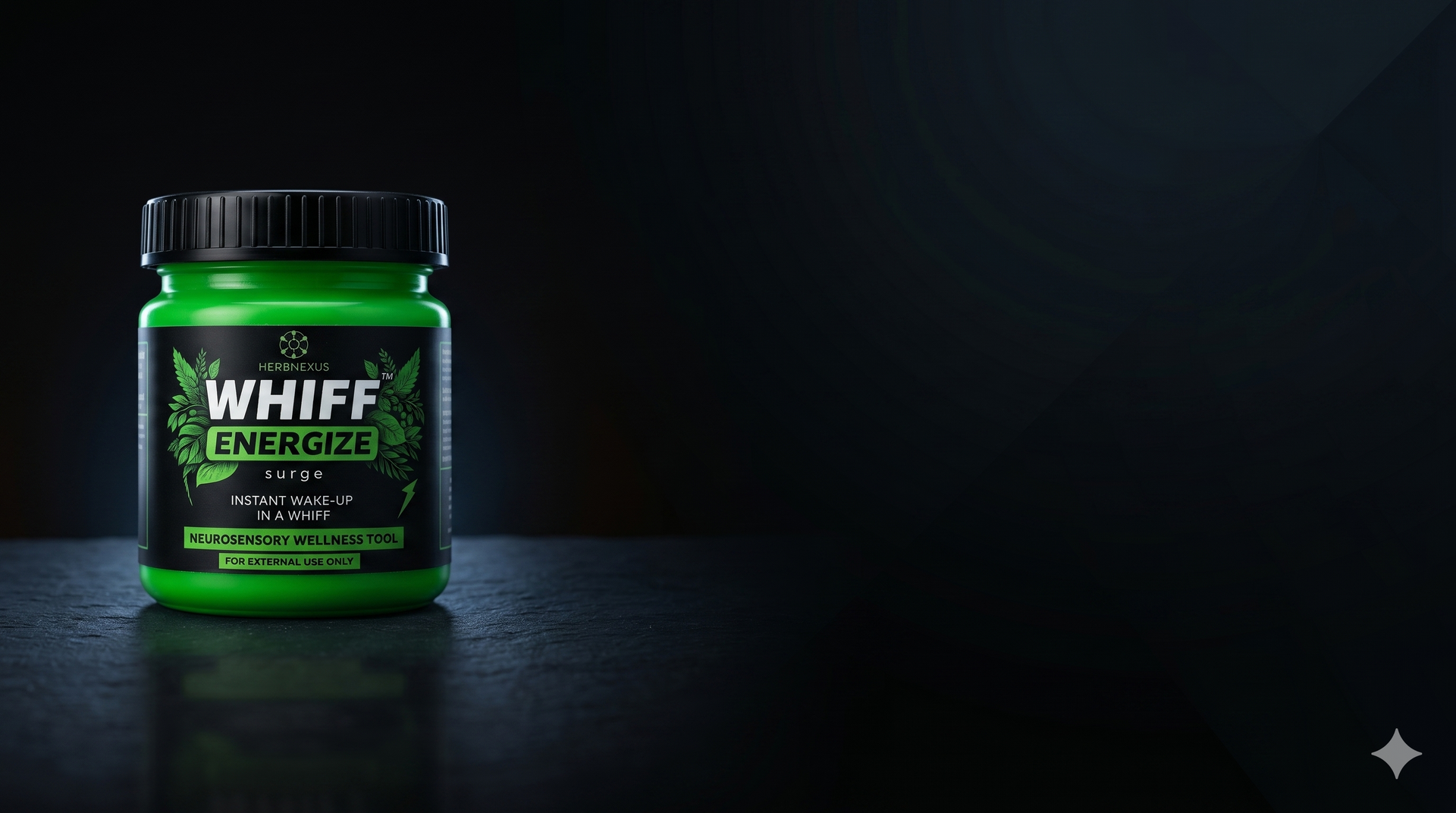
Whiff is a neurosensory state-switching system for switching your state on demand: a deliberate breath protocol, a sensory inhaler that anchors it, and the companion Whiff State OS app that turns it into a tracked, repeatable practice — not aromatherapy, not a supplement, not a medication.
Key takeaways
- A state shift is a mode change you trigger on purpose, not a feeling you wait for.
- Performance tends to track state more than discipline or skill.
- Your nervous system shifts in response to signals — breath, scent, light, movement.
- Breath is the fastest lever because you can run it on command.
- Scent is a fast signal that anchors the shift and makes it repeatable.
- Run the sequence enough times and it becomes a conditioned cue.
What is a state shift, exactly?
A state shift is a change in how you are operating — your attention, your energy, your readiness — produced on demand rather than left to chance. Think of your best working day in the last month. You did not gain new skills overnight or become a different person. You were in a different state: attention sharper, decisions faster, energy pointed at the task in front of you. The reverse is also true. When you procrastinate, overthink, or feel scattered, the problem is usually not capability. It is state. A state shift is the move from one of those modes to the one you actually need, run through a repeatable sequence.
How is a state shift different from a mood?
A mood happens to you. A state shift is something you trigger on purpose. A mood arrives unannounced, lingers, and lifts on its own schedule. A state shift is initiated by a deliberate cue — a breath pattern, a sensory signal — and aimed at a specific mode you want to be in. The distinction matters because most people treat their working state as weather: something to wait out. Treating it as a setting you can change is what separates consistent performers from people who perform only when they happen to feel ready.
| Attribute |
A mood |
A state shift |
| How it starts |
Happens to you |
You trigger it |
| Driven by |
Circumstance |
A repeatable cue |
| Timing |
Lifts on its own schedule |
On demand, in about a minute |
| Direction |
Unaimed |
Toward a chosen mode |
What actually changes your state?
Your nervous system is processing signals every second — light, sound, movement, breath, and scent — and most of that processing happens below conscious awareness. A familiar scent can pull back a memory instantly. A slow breath can quiet mental noise. A change of environment can sharpen alertness. The nervous system is constantly adjusting to incoming information, and the result is a change in state. This is the principle a state shift runs on: change the signal and you change the state. You do not have to talk yourself into a different mode. You give your system a different input.
Why is breath the fastest lever?
Breath is the fastest lever because it is one of the few inputs that is both automatic and voluntary — you can ignore it, or take it over on command. How you breathe influences how activated or settled the system feels: a longer exhale than inhale tends to settle it, while fuller, quicker breaths tend to activate it. In a 2023 Stanford randomised controlled trial, five minutes a day of exhale-focused breathing lowered resting respiratory rate more than mindfulness meditation (Balban et al., Cell Reports Medicine, 2023). This is why structured breathing is used by athletes, public speakers, and performers — it is a control mechanism, not motivation. Whiff matches a specific breath pattern to each target state in the Whiff breath protocols.
How does scent fit into a state shift?
Scent fits as the anchor. Among the senses, scent reaches the brain's emotion and memory centres more directly than any other, which is why a single smell can return a memory in an instant. A sharp, cooling sensory signal also engages the trigeminal nerve, which adds an alerting edge. In a state shift, the scent is not the active ingredient — it is the signal that marks the moment, so the brain begins to associate the cue with a specific mode of operation. Paired with a deliberate breath, the scent makes the sequence repeatable. That is the difference between a one-off feeling and a conditioned cue you can reach for on demand.
How do you switch your state on demand?
You switch your state on demand by running a protocol — a repeatable sequence that signals the body and mind to move toward a desired mode. Whiff's named method is the State Protocol: pause, take the scent cue, run the breath, then execute. Run often enough, the sequence becomes an anchor; the system learns to associate it with a specific state, and the shift gets faster and more reliable each time. That is where consistency starts — not in becoming a different person, but in learning to switch states on command. New to the system? Start with What Is Whiff?
Frequently asked questions
What is a state shift?
A state shift is a deliberate change from one mental and physical mode to another — produced on demand by a protocol, rather than by waiting for motivation. The lever is the signal you give your nervous system, not willpower.
How is a state shift different from a mood?
A mood happens to you and lifts on its own schedule. A state shift is something you trigger on purpose, with a repeatable cue, aimed at a specific mode you want to be in.
Can you really switch your state on demand?
With a repeatable protocol, yes. The point is the signal you give your nervous system rather than willpower. Run the sequence enough times and it becomes a conditioned cue that works faster each time.
What is the fastest way to shift state?
Breath. It is one of the few systems you can run automatically or take over on command, and changing the pattern changes how activated or settled you feel — often within about thirty seconds.
Where does scent fit into a state shift?
Scent is a fast sensory signal the nervous system responds to. Paired with deliberate breathing it acts as the anchor for the shift, marking the moment so the sequence becomes repeatable. The scent is the anchor, never the active ingredient.
Whiff is a neurosensory state-switching system for switching your state on demand. The mechanism is a deliberate breath protocol; a sensory inhaler anchors it, and the companion Whiff State OS app turns it into a tracked, repeatable practice. It is not aromatherapy, not a supplement, and not a medication. State is a setting. Switch yours.
Whiff is a neurosensory state-switching system. Whiff is not intended to diagnose, treat, cure or prevent any disease. Always consult a qualified practitioner before use if you have a medical condition.
About the author
Daksh Murkute, founder of Whiff (HerbNexus Private Limited). He writes on neurosensory science, breath protocols, and state-switching.
Connect: LinkedIn · X · Instagram